I’ve attended book clubs in both Turkey and Lisbon, and they felt like completely different experiences.
In Lisbon, participants suggest books for the following month and vote on them together on Whatsapp. During the event, everyone breaks into small groups of four or five. The moderator provides questions to discuss, and groups reshuffle after each round of discussion. You get to hear different perspectives, meet new people, and spend most of the evening actively participating.
You might wonder, how is the software engineering job different nowadays?
I started a remote job recently. It’s a startup with less than 15 people, ~5 engineers and this is my first job after the AI / LLM revolution. We use Cursor to write AI assisted code. Here’s my experience:
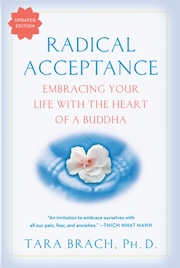
In the book Radical Acceptance by Tara Brach, there is a list of questions to identify what she calls “the trance of unworthiness”. I thought they were very powerful question to raise awareness about our judgemental selves:
Do I accept my body as it is?
Do I blame myself when I get sick?
Do I feel I am not attractive enough?
Am I dissatisfied with how my hair looks?
Am I embarrassed about how my face and body are aging?
Do I judge myself for being too heavy? Underweight? Not physically fit?
Do I accept my mind as it is?
Do I judge myself for not being intelligent enough? Humorous? Interesting?
Am I critical of myself for having obsessive thoughts? For having a repetitive, boring mind?
Am I ashamed of myself for having bad thoughts—mean, judgmental or lusty thoughts?
Do I consider myself a bad meditator because my mind is so busy?
Do I accept my emotions and moods as they are?
Is it okay for me to cry? To feel insecure and vulnerable?
Do I condemn myself for getting depressed?
Am I ashamed of feeling jealous?
Am I critical of myself for being impatient? Irritable? Intolerant?
Do I feel that my anger or anxiety is a sign that I am not progressing on the spiritual path?
Do I feel I’m a bad person because of ways I behave?
Do I hate myself when I act in a self-centered or hurtful way?
Am I ashamed of my outbursts of anger?
Do I feel disgusted with myself when I eat compulsively? When I smoke cigarettes or drink too much alcohol?
Do I feel that because I am selfish and often do not put others first, I am not spiritually evolved?
Do I feel as if I am always falling short in how I relate to my family and friends?
Do I feel something is wrong with me because I am not capable of intimacy?
Am I down on myself for not accomplishing enough—for not standing out or being special in my work?
As we gain experience in life, we accumulate habits. They help us succeed in our current environment but when the environment changes, those same habits can start working against us.
One of the most underrated skills is unlearning. Growth isn’t just about adding new capabilities; it’s also about letting go of behaviors that no longer fit.
An example from my life is about driving. Growing up in Turkey, I developed a habit of accelerating on yellow lights to make it through. This has been the cultural norm, but it came with consequences when I moved to USA.
I once heard a productivity tip from one of Facebook’s most productive engineers. Apparently this technique is attributed to Ernest Hemingway and called the “Hemingway Bridge”.
The idea is simple: Don’t finish your task at the end of the work day. Leave it slightly incomplete on purpose.
The goal is to give your future self a clear, easy entry point to start working. Getting started is often the hardest part, but once you begin, momentum tends to carry you forward. This technique lowers that initial resistance and makes it easier to get into a flow state.
1. What are your thoughts on the idea of numbers to leave numbers or form to leave form? How would that idea translate to your occupation?
The path to artistic insight in one direction often involves deep study of another—the intuition makes uncanny connections that lead to a crystallization of fragmented notions. The great Abstract Expressionist painters and sculptors, for example, came to their revolutionary ideas through precise realist training. Jackson Pollock could draw like a camera, but instead he chose to splatter paint in a wild manner that pulsed with emotion. He studied form to leave form. (p85)
I was running on the beach when a big wave hit the shore and soaked both of my shoes. My feet got cold. To keep going, I had to take my shoes off and carry them.
There were plenty of unhelpful ways I could have reacted:
I could catastrophize: “This ruined my run”
I could play the victim: “Why did this happen to me?”
I could blame myself: “I’m so careless”
I could resist: “This shouldn’t have happened”
Instead of getting frustrated, I approached the situation with curiosity:
Living in New York meant having access to world class art museums. In times of loneliness and boredom, I would find myself indulging in a museum, looking for creativity and inspiration.
After moving back to Istanbul, I found a similar sense of connection through Istanbul Modern Museum’s youth program, Genç Modern. It filled my calendar with regular events and introduced me to a new circle of friends. At the same time, I started to understand the art world and different players in the business of art: curators, art galleries, museums, and artists.
Mental resistance isn’t in doing the task. It’s in getting started.
When I’m in LA, my morning routine is to wake up at 6:30 and drive to the ocean for a run. Many mornings, I don’t feel like running at all. The moment I wake up, a mental negotiation begins: stay in bed longer, or get up and get dressed?
When I don’t feel like running, I convince myself by saying I’ll just go for a walk. Breathe the ocean air, listen to the waves, be outside. That feels enjoyable and easy.
Every month, I get an energy bill without being able to attribute that cost to different appliances I have at home. I wanted to build an intuition for how much electricity each appliance in my home consumes.
I purchased a power meter ($10) and measured a range of everyday appliances. Here are the results: